23 kilometers from Kandania Paradise, Agia Eirini Gorge leads you through shaded trees, rocky passages, and local history before the route opens toward Sougia and the Libyan Sea
25 May 2026•5 Min Read •22.8 km from Kandania Paradise • ~39 Mins Drive
Agia Eirini Gorge is a shaded walking route from the mountain side of Selino toward the south coast, with trees, rocky passages, small bridges, and a steady downhill rhythm above Sougia. From Kandania Paradise, it is 22.8 km away, with a driving time of about 39 minutes, which makes it a very natural day out from Kandanos for guests who want a real Cretan gorge walk without making the whole day difficult.
What the walk feels like
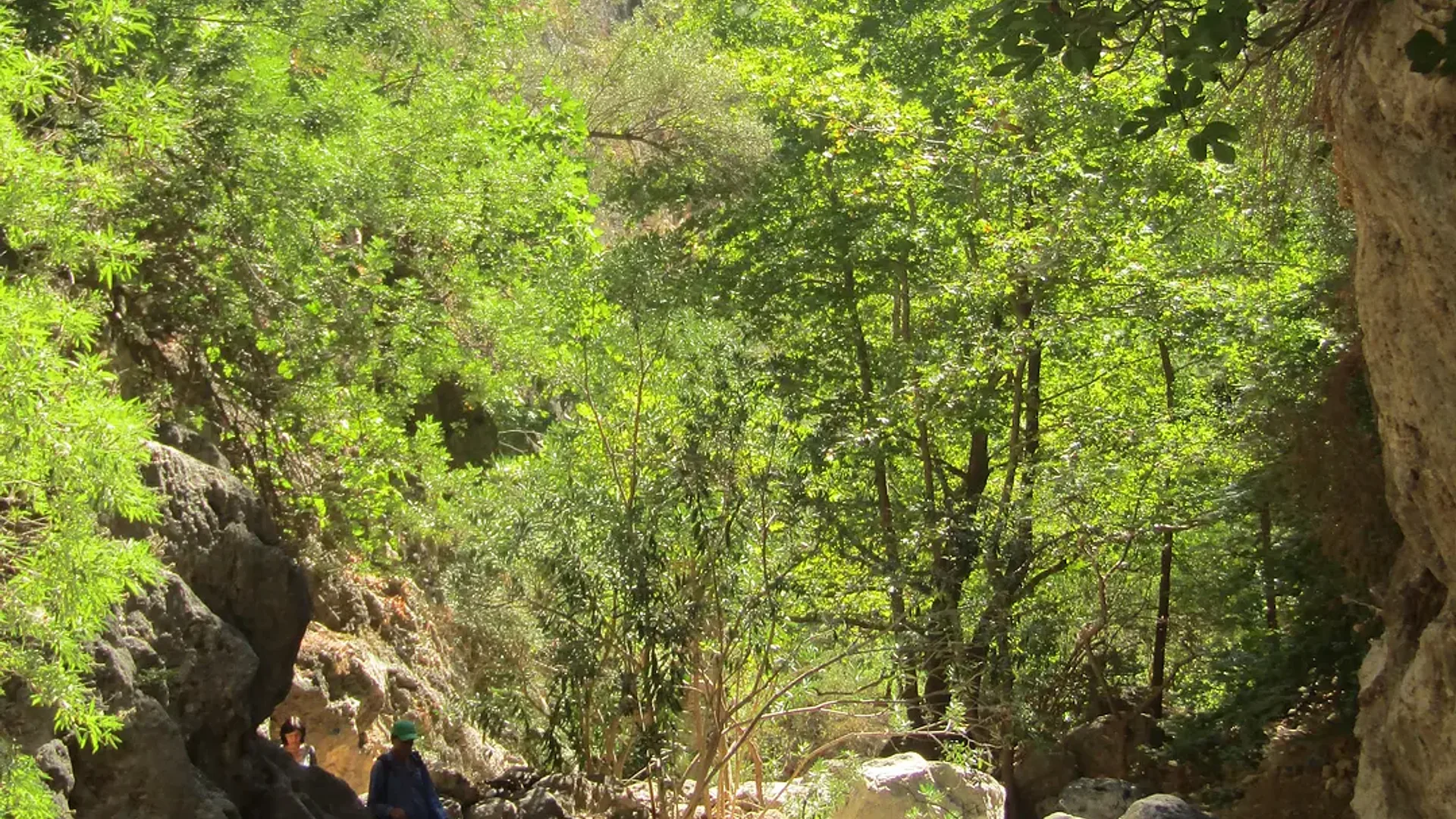
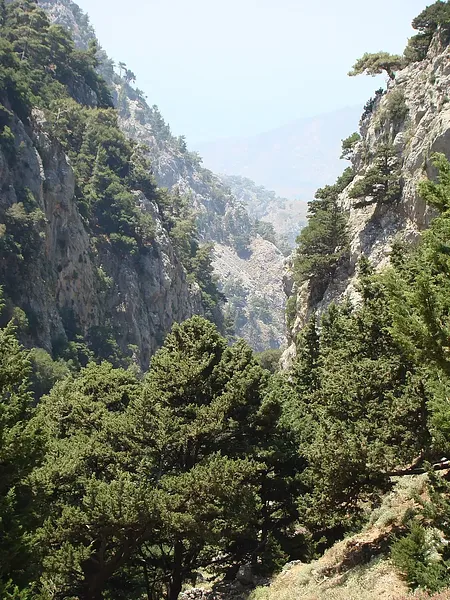
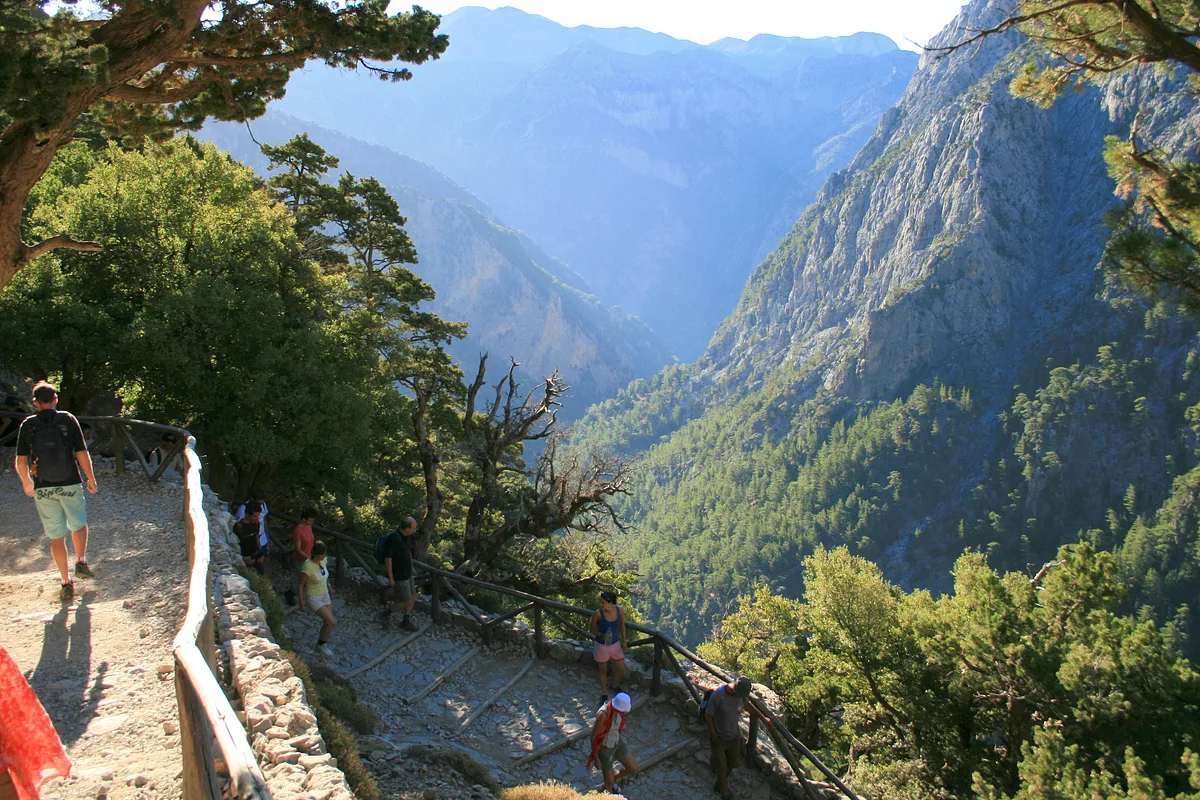
The upper part feels wooded and enclosed. Pine and plane trees soften the rocky slopes, while oleander and aromatic herbs appear along the path. In some places the cliffs rise close to you; in others the gorge opens and lets in a wider view of the valley.
The mood changes with the season. In spring, the gorge has more green growth and the air can carry the smell of herbs. In summer, cicadas become part of the soundscape, often louder than the people walking. Later in the season, the route feels drier and more mineral, with the pale rock and small riverbed stones taking more of the attention.
Nature and history in the same passage
Agia Eirini is part of the E4 European walking path and belongs to a protected natural area with rich vegetation and wildlife habitat. The shade is not only what makes the walk more comfortable. It is also part of the character of the gorge. Pine, plane trees, oleander, herbs, and rocky slopes create a cooler passage where birds, insects, goats, and small animals can move through the landscape with less disturbance.
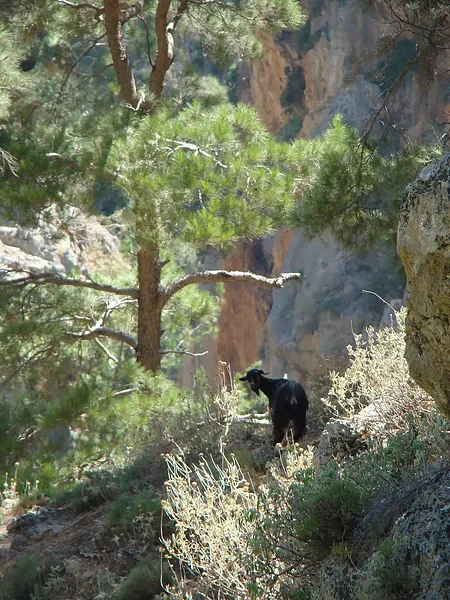
The Cretan wild goat is associated with this wider mountain zone, though sightings should be treated as a piece of luck, not something to expect. More often, the pleasure is quieter: movement in the trees, birdsong above the path, the sound of cicadas in summer, or a goat appearing briefly between the rocks before disappearing again.
The gorge also carries historical weight. During the Ottoman period, the area gave shelter to local rebels, and in 1866 women and children are remembered for escaping through the gorge during the uprising. The narrow passages and shaded recesses make it easy to understand why a place like this mattered to people who knew the mountains well.
Length, terrain, and pace
The main gorge walk is usually given as around 7 to 7.5 km. Most guests should allow about three hours inside the gorge at a steady, unhurried pace. Add time for photos, water breaks, and the plan at the exit. Guests walking with children, or anyone who likes to stop often, should allow longer.
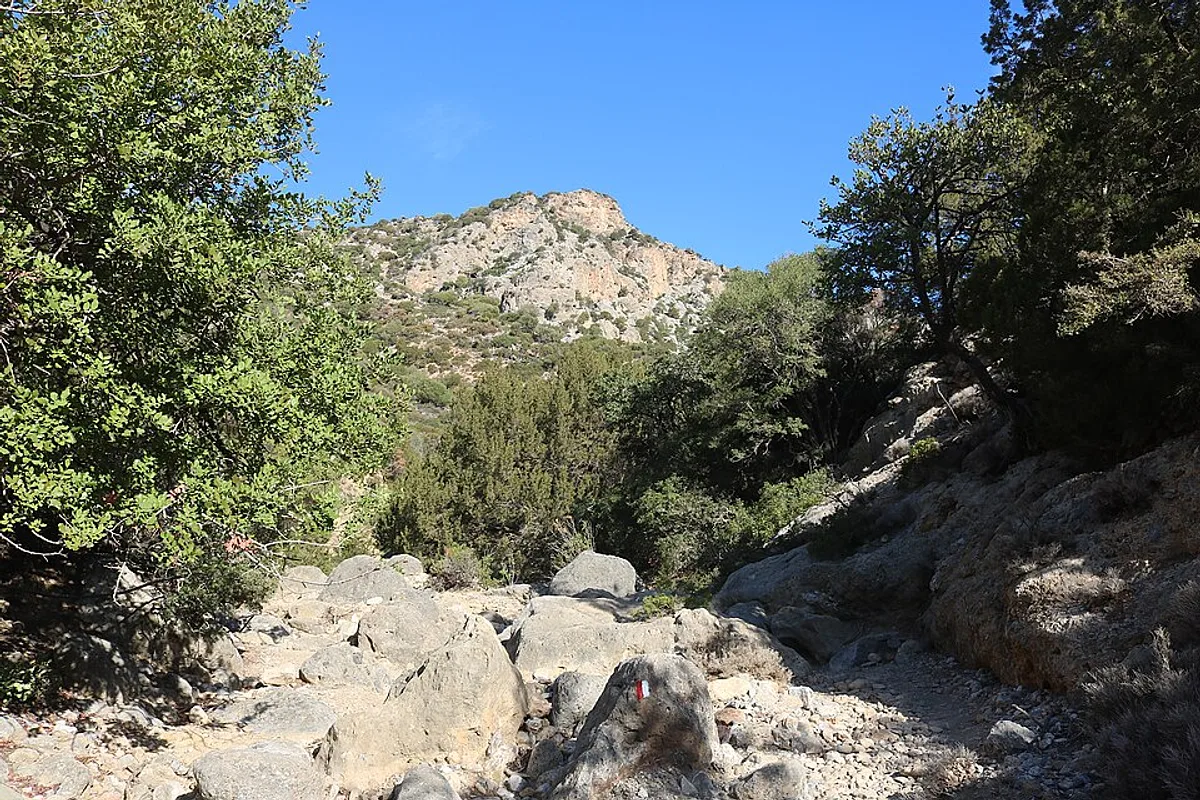
The path is marked and maintained, but footwear matters. Trainers with good grip can be enough in dry conditions, though light hiking shoes are better. Smooth sandals or thin soles will make the loose stones more tiring than they need to be.
Most of the route trends downhill from the Agia Eirini village side toward the lower exit above Sougia. There are rest points along the route, and toilets are commonly available on the maintained path, but it is still wise to carry your own water. Water points in Cretan gorges can depend on season and maintenance.
Plan the ending before you start
Agia Eirini is easiest to enjoy when the ending is settled before you enter the gorge. The lower exit is not directly on Sougia beach, and the final road section can feel exposed in hot weather. Most guests either start near Agia Eirini village, walk downhill through the full gorge, and return by arranged transport, or approach from the lower end, walk in as far as they like, and turn back. The full downhill route gives the strongest sense of the gorge unfolding. The out-and-back version gives more control on warm days or with mixed walking abilities.
The Coastal Reward
Completing the hike leaves you very close to the Libyan Sea. Most visitors choose to take a taxi from the gorge exit straight down to Sougia rather than heading immediately back to their cars.
Sougia is a relaxed seaside village featuring a long pebble beach. The water here is incredibly clear. It deepens quickly, offering a brilliantly cold and refreshing swim after hours of walking on dusty trails. The seafront is lined with low-key tavernas serving fresh food. Sitting by the water with a cold drink and a plate of local cheese is the perfect way to conclude the physical part of the day.
You can easily spend two or three hours resting in Sougia before hiring a taxi from the village rank to take you back up to the Agia Eirini parking lot. Once you retrieve your car, the drive back to Kandania Paradise is a smooth climb up the mountain roads. You return to your room in time for a quiet evening, having explored one of the most rewarding natural landscapes in western Crete.
What to bring
Bring water, closed shoes with grip, sun protection for the open sections, a charged phone, and enough cash for small local expenses if needed. A light snack is useful even if you plan to eat after the walk. In spring, a thin layer can be comfortable at the start. In summer, start light and keep everything easy to carry.
The best way to enjoy Agia Eirini Gorge is to treat it as a proper walking day with a gentle pace. Give yourself time to look up at the cliffs, stop under the trees, notice the change in the rock, and arrive at the lower end with energy left for the rest of the day.
Located 41.4km from Kandania Paradise, Xyloskalo marks the beginning of Crete’s most famous hike. The trail winds through beautiful pine forests, passes the old village of Samaria, and navigates the narrow Iron Gates before ending at Agia Roumeli.
20km from Kandania Paradise is the Anydri Gorge, a 3km hike in southwest Crete starting from Anydri village that leads straight to the pebbles of Gialiskari Beach
_01.webp.Lissos_Asklepieion_temple_from_E_(1992)_01.webp?locale=en)