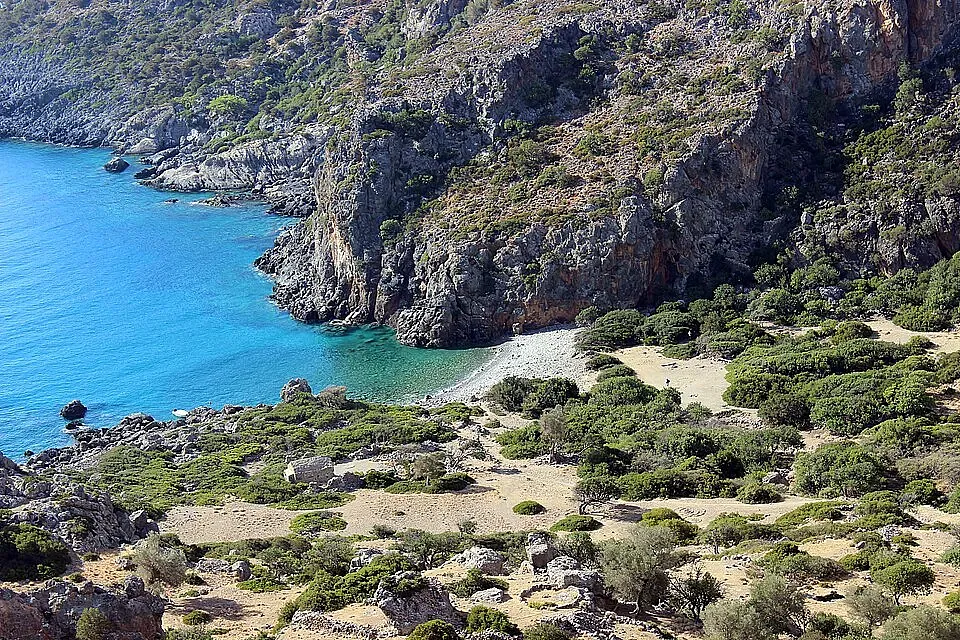
Lissos is an ancient area that opens directly onto the Libyan Sea, completely cut off from the modern road network. It was once a highly significant city in western Crete, famous throughout the region for its healing springs. Today, it stands as an open archaeological site set in a wild, unpopulated landscape. You will find the remains of a Greco-Roman port and a quiet pebble beach, all set within an atmosphere defined by isolation and quiet history.
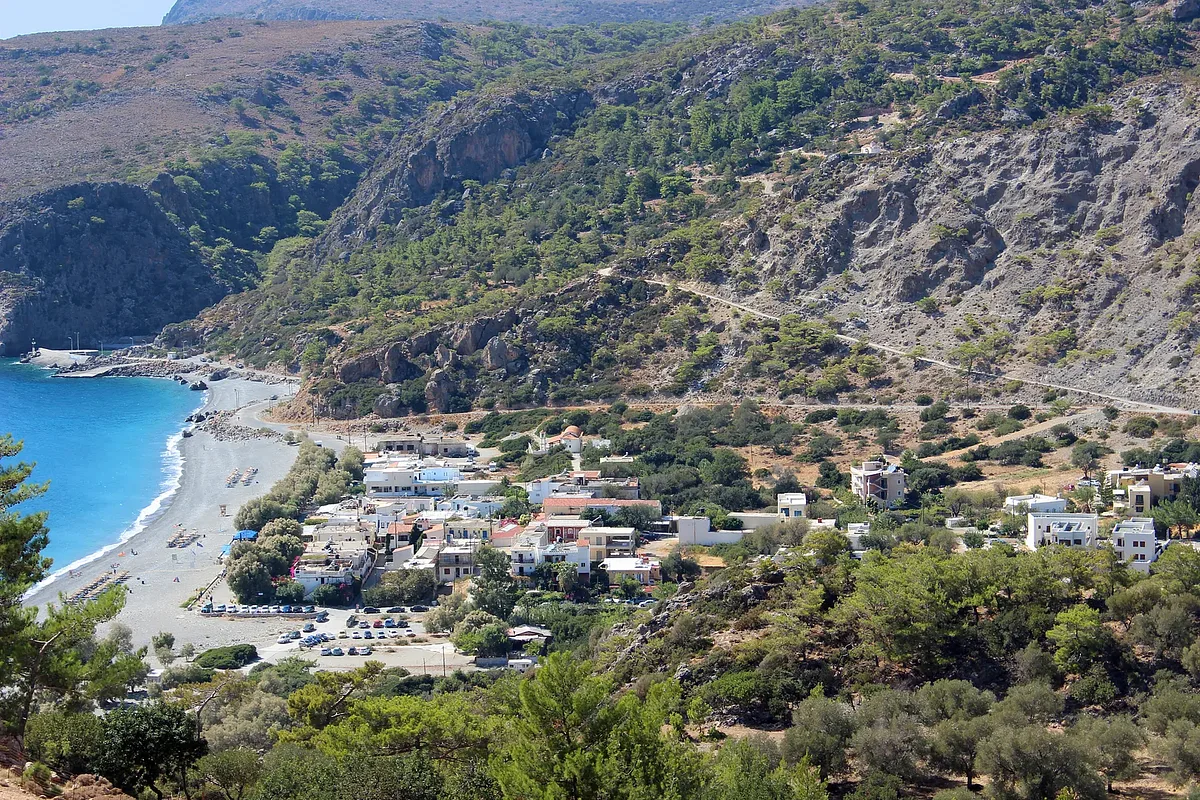
The 18km drive from Kandania Paradise down to the coast takes exactly 36 minutes. Although in guest planning, the easiest rhythm is to drive toward Sougia first, then continue to Lissos either on foot through the gorge path or by boat when local boats are operating. This makes Lissos a strong half-day or relaxed day trip from Kandania Paradise.
The trail from Sougia
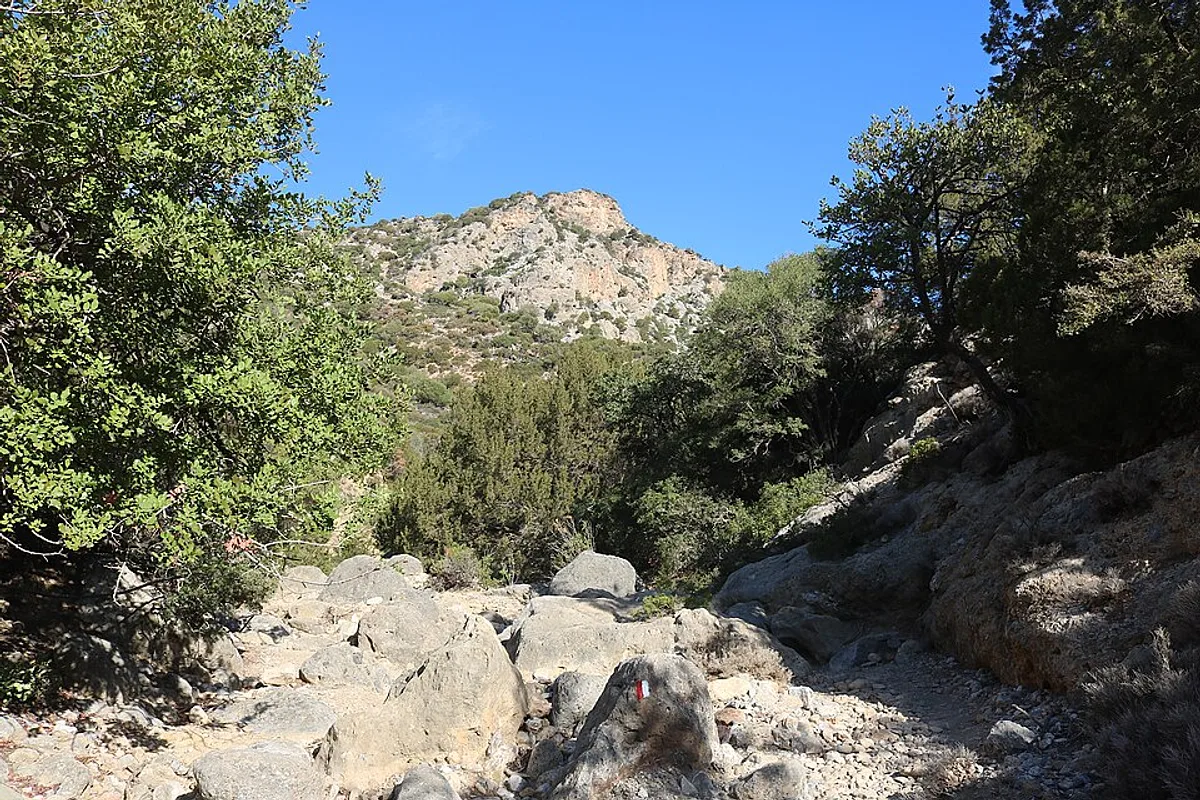
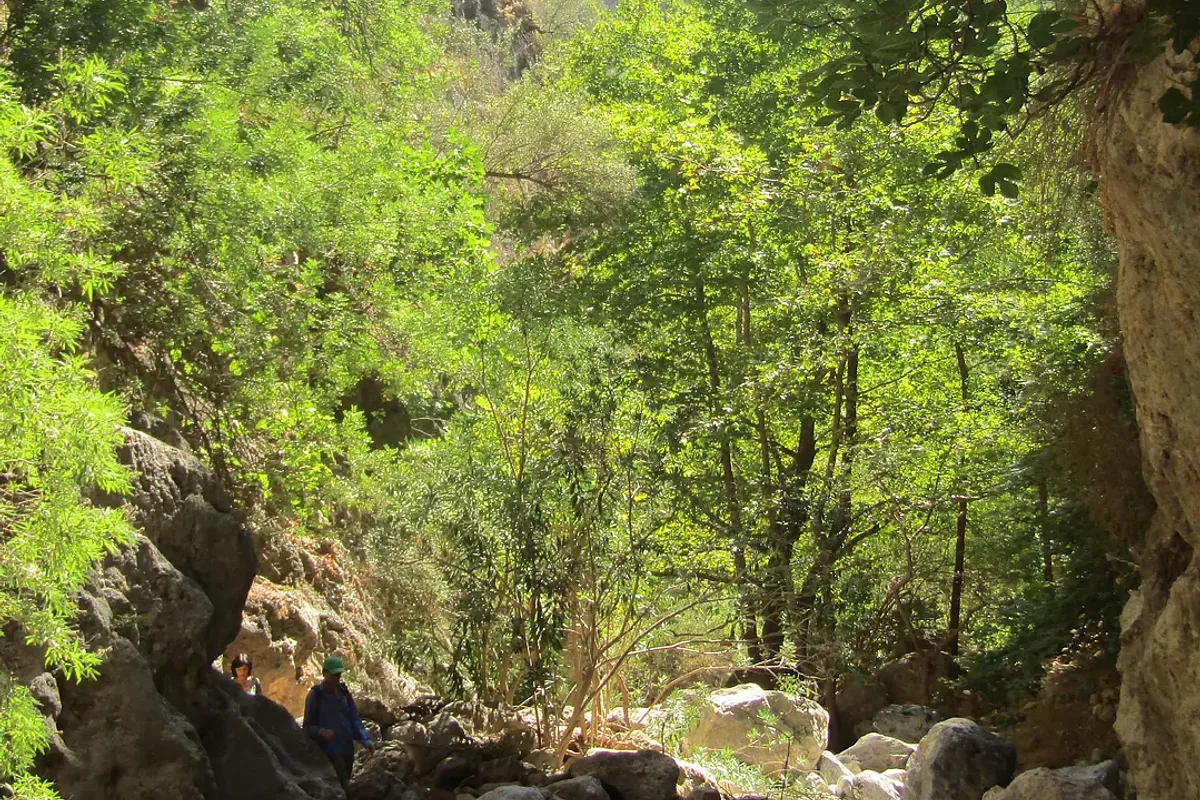
Walking to Lissos is one of the most satisfying short hikes in the area. The route is part of the E4 European trail and takes about ninety minutes to two hours each way. The path starts at the harbor of Sougia, winding through a steep gorge filled with old pine trees that offer excellent morning shade. The trail is well-marked with paint on the rocks.
After passing through the gorge, the path climbs steeply onto a rocky, sun-exposed plateau. From this high ground, the land suddenly drops away, revealing the Lissos below. The descent into the ancient city is highly rewarding, giving you a clear layout of the ruins and the open water. The terrain requires proper hiking shoes with good grip. The loose stones on the descent can be slippery, so a steady pace is required.
Arriving by sea
If you prefer to skip the hike, the water taxi from Sougia offers a fast alternative. The boat ride takes about ten minutes, hugging the dramatic coastal cliffs before dropping you off directly on the Lissos beach. A very common and enjoyable way to structure the day is to hike to Lissos in the morning while the air is cool, explore the site, swim, then take the boat back to Sougia in the afternoon. You can arrange this with the boatmen at the Sougia harbor before you start walking.
The Asklepieion
The most important structure in the region is the Asklepieion, a temple dedicated to Asclepius, the god of healing. During antiquity, people traveled from all over Crete to this specific region seeking cures for their ailments, drawn by the local spring water which was believed to have therapeutic properties.
The temple ruins are remarkably preserved. As you approach the stone foundations, you can look down at the original mosaic floor. The mosaics depict highly detailed geometric patterns alongside figures of birds. Seeing artwork of this quality sitting exposed in a wild mountain area, far from any museum or modern settlement, is a distinct experience. You will also see scattered stone blocks bearing ancient Greek inscriptions.
The Roman Odeon
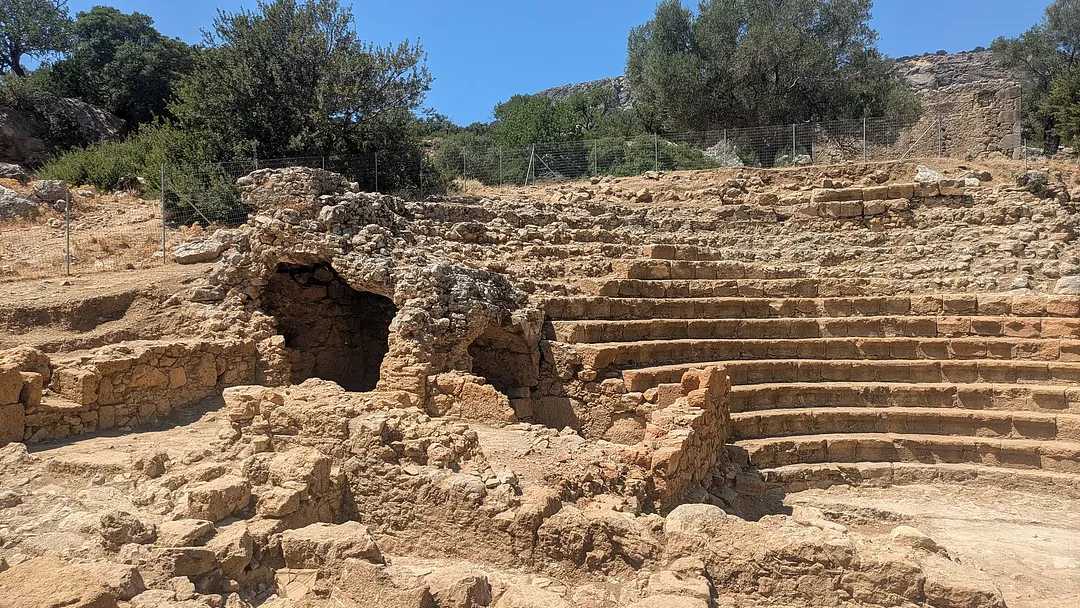
Just a short walk from the temple lies a first-century Roman odeon. Excavated recently, this small theater features fourteen rows of seating and vaulted side chambers. It likely served as both an acoustic performance space and a meeting place for the city council. The structure also holds a striking physical record of the area's geological history. On the northwestern side of the seating area, massive boulders rest directly on the ruined rows. These rocks were swept through the building during a severe earthquake in the fourth century, leaving the theater exactly as the natural disaster shaped it.
The Roman Necropolis
On the western slopes of the region, just above the main ruins, sits an extensive Roman necropolis. These are small, vaulted tombs built directly into the hillside. The scale of the cemetery gives a clear indication of how populated and busy this city was during its peak. Walking among the tombs offers a very different perspective on the ancient world compared to looking at grand temples. Because there are no fences, you can walk the paths right next to them.
The surrounding area and the beach
Beyond these specific archaeological structures, the entire surrounding area is steeped in history. You’ll walk past the remains of Roman baths and broken columns, along with the faint outlines of ancient houses. Huge, ancient olive trees grow right through the foundations of old buildings.
Near the beach, you’ll notice the small, white chapel of Agios Kirykos. It stands in stark contrast to the ancient ruins around it. The chapel was built using stones gathered from the surrounding ancient city, bridging two completely different eras of history.
The pebble beach curves around a small cove. The waters here are deep, exceptionally clear, and ideal for a swim after a hot walk through the ruins. It’s a quiet place to rest before your return journey.
What to Bring
Lissos is completely undeveloped. There are no cafes or ticket booths. You will not find public toilets or shops. You must bring absolutely everything you need for the day.
Water is essential. While the ancient spring still flows near the temple, the water is not considered safe for modern drinking. Carry enough water for both the hike and your time exploring Lissos. Pack some food in your bag, as the fresh air and swimming will make you hungry before you return to the tavernas in Sougia.
The sun is intense here, particularly from June through September. Arriving early in the morning allows you to tackle the uphill sections of the hike and view the mosaics before the heat of the day sets in. A wide-brimmed hat and good sunscreen are essential.
Lissos from Kandania Paradise
Lissos works beautifully from Kandania Paradise because it connects the mountain side of our area with the south coast in one outing. The drive is short enough for a half-day plan, but the experience feels full. It combines inland roads and a historic walking route with ancient ruins beside the Libyan Sea
It is also a good choice for guests who want history without spending the day in a crowded archaeological site. Lissos asks for a bit of movement and planning, but it gives back something rare: a place where the ancient shrine feels entirely connected to the surrounding area and the coastline.
Half an hour from Kandania Paradise, Sougia offers a south-coast escape with clear Libyan Sea water, a long pebble beach, and a relaxed pace that suits a slow afternoon by the sea.
20km from Kandania Paradise is the Anydri Gorge, a 3km hike in southwest Crete starting from Anydri village that leads straight to the pebbles of Gialiskari Beach
23 kilometers from Kandania Paradise, Agia Eirini Gorge leads you through shaded trees, rocky passages, and local history before the route opens toward Sougia and the Libyan Sea
_01.webp.Lissos_Asklepieion_temple_from_E_(1992)_01.webp?locale=en)
.webp?locale=en)